Peer registry
A node asks for a short-lived challenge and signs it with an Ed25519 key that must match its CometBFT node ID. Challenges expire after two minutes, work once and are bound to the requesting address.
Node operations
HPX installs and runs validators and full nodes, then covers backups, monitoring and upgrades.
Six steps below
Step 01
HPX sets up a full node or validator on a Linux host with systemd, and checks each download against published checksums before it installs.

Step 02
A registry lists known peers so you do not collect addresses by hand, and state sync brings a lagging node back without replaying history.
A node asks for a short-lived challenge and signs it with an Ed25519 key that must match its CometBFT node ID. Challenges expire after two minutes, work once and are bound to the requesting address.
The manager stops the service, applies trust height and hash from the mirror, resets the node's data and restarts it. You keep your own node key, which ties the node to its identity.
Step 03
A validator operator generates an operator key and stakes from the same tool. For a fleet, a journal makes every retry safe.
Generate the operator key and stake from one tool. For many hosts, a collector gathers each host's public operator identity over SSH.
It records each allocation and the exact signed transaction before broadcast, then checks for committed success and the expected balance.
An interrupted run resumes instead of repeating. A retry sends only what is still missing and never signs the same payment twice.

Step 04
A timer captures the full node home and the kernel store, encrypted with age. Before publishing or pruning, the script restores the archive and checks it.
Step 05
Prometheus, Alertmanager, Blackbox Exporter and node_exporter run in containers, with targets rendered from a single host list.

Step 06
Upgrades follow a plan instead of improvisation. A wave starts only after every lower wave has passed its health check.
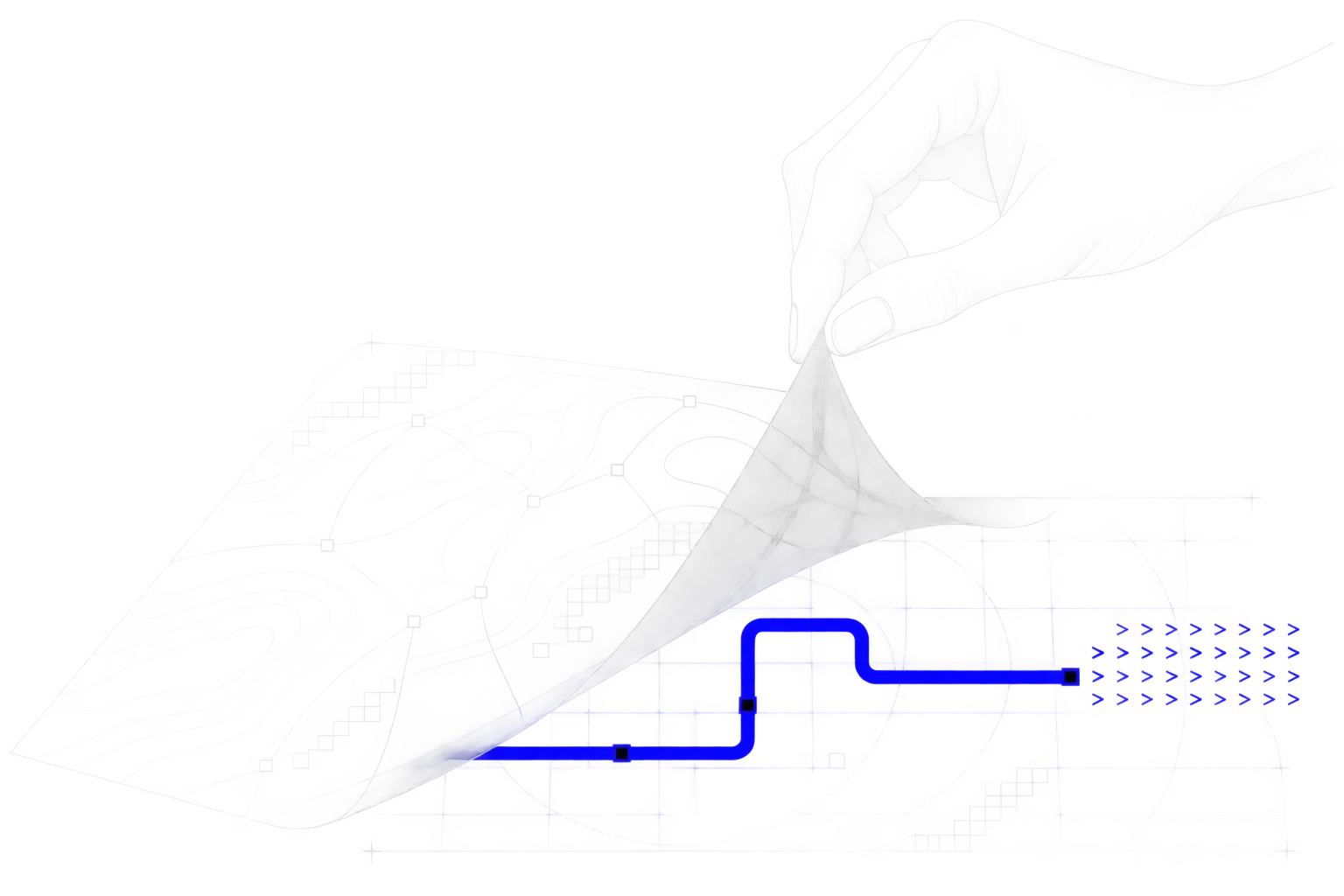
A manifest assigns each hosted service a wave. Each health result goes into a ledger as evidence before the next wave begins.
A fleet script stages a checksum-verified binary beside the running one, waits for each unit to log the upgrade halt at the agreed height, swaps the binary and restarts it.
The 7.0.0 validator runbook walks operators through the same route manually, with pre-checks, rollback conditions and post-upgrade verification.
Operators
Whether you sign blocks, serve RPC, run a fleet or host a mirror, each job takes its own steps from the list.

Install, stake, back up and upgrade a signing node with checks at each step. Steps 01 to 06.
Run a verified node, rejoin by state sync and keep it observable. Steps 01, 02 and 05.
Manage many hosts or Kubernetes nodes with durable state, staged waves and alerts.
Publish immutable releases that others can verify against a source revision.
A release needs at least three distinct seed peers, refuses a genesis with the wrong chain ID, and switches in atomically, so a failed staging run leaves the current release untouched.
Teams on Kubernetes have a separate command line, built as the seictl module. Treat it as an optional path next to HPX; it keeps its inherited naming conventions.
Done
Install HPX on a Linux host, read the 7.0.0 validator runbook, or talk to us about running a validator or hosting a mirror.